

Tupperdor vs. Humidor: What Should You Use in 2026?
by Abraham Wolke
If you're just getting into cigars, don't feel like you need to buy an expensive wood humidor. For most people starting a collection in 2026, a well-sealed tupperdor is the best default. A tupperdor is just a clean food-storage container with a gasketed lid that you use for cigar storage. A humidor bag may be all you need for a handful of cigars. If you're storing boxes or live somewhere with regular temperature swings, an insulated cooler is hard to beat.
Put the money into cigars first. You can buy the beautiful wood humidor later, when you want something worth looking at on your desk or bar.
Start with capacity. Then think about appearance.
The two questions that usually decide this purchase are simple:
- Will it hold the cigars you own now, plus the ones you are likely to buy next?
- Do you want to display it, or do you just want storage that is easy?
Desktop humidors are beautiful. They're also easy to outgrow. Before long, cigars are scattered across a few boxes, travel cases, and whatever else was nearby. Now the collection is harder to organize, and it's harder to make sure every cigar stays properly humidified and maintained.
A bag, a large plastic container, or a cooler gives you room to grow without spending much. If one big container feels unwieldy, use two or three smaller ones. They're easier to organize, and you can separate cigars by style or by the humidity you prefer. For travel, take what you need in a separate case. Your home storage doesn't need to be portable.
What are the different cigar storage container types?
Cigar smokers use a few made-up names for otherwise simple containers. Here is what each one means and when it makes sense.
| Container | What is it? | Best for | What it does well | What to watch |
|---|---|---|---|---|
| Humidor bag | A resealable bag designed for cigar storage and used with a humidity pack | A small collection, travel, or temporary storage | Inexpensive, compact, and easy to use | Ordinary food bags leak more, and cigars can be crushed or punctured |
| Tupperdor | A clean, food-safe plastic container with a gasketed lid that is used as a humidor | Everyday storage for a small or medium collection | Good protection, easy organization, and reliable moisture retention when the gasket seals well | Plastic does not protect against heat, and not every lid seals well |
| Coolidor | An insulated camping or beverage cooler that has been converted into a large humidor by adding humidity packs | Boxes, overflow, growing collections, and homes with temperature swings | Large capacity and insulation that slows temperature changes | Check the lid, because not every cooler is airtight; it is also bulky and does not actively cool |
| Wineador | A wine refrigerator converted for cigar storage, usually with humidity packs added | Larger collections that need actual temperature control, not just insulation | Active cooling and a more stable temperature than a cooler or tupperdor | Higher cost, still needs humidity packs, and a too-cold setting or compressor vibration can be a problem |
| Wood humidor | A purpose-built wooden or wood-lined box for storing cigars, usually with exposed Spanish cedar inside | Display, special occasions, and a regular smoking rotation | Presentation, organization, cedar aroma, and moisture buffering | Higher cost, seasoning, differences in build quality, and more attention |
A plastic bag is a perfectly good place to start
A sturdy freezer bag and a properly sized two-way humidity pack are a reasonable way to begin. That setup also works for travel or while you choose a more permanent container. Keep the bag away from heat and somewhere the cigars won't be crushed.
There is a difference between an ordinary food bag and a purpose-built humidor bag. The zipper on a food bag isn't designed to be a long-term humidity seal. It usually allows more air and moisture exchange, which makes the humidity pack work harder. A purpose-built humidor bag is designed for longer cigar storage.
When you want more protection and organization, move to a tupperdor. Choose a clean, odor-free, food-safe container with a gasketed lid. Don't assume it's airtight just because it's plastic. The seal matters more than the material label on the bottom.
For most new cigar smokers, that's enough. Use the number of humidity packs the maker recommends for the container's full capacity, close the lid, and let the system do its job. Multiple humidity packs at the same RH give the system more working capacity. They don't add those RH numbers together.
Why a converted cooler, or coolidor, deserves more attention
A coolidor is just a clean insulated cooler, like the kind you'd take to the beach, that you use as a large humidor. Add humidity packs, check the seal, and you have a lot of inexpensive storage. A wine refrigerator converted for cigar storage is usually called a wineador.
When boxes start stacking up, a coolidor is often the smartest move. It gives you the same basic plastic-storage idea at a larger scale, with the added benefit of insulation.
An insulated cooler slows heat moving through its walls. The cigars inside usually warm up or cool down more slowly than they would in a thin bag or an uninsulated plastic box. The physics are different, but the idea is similar to cedar buffering moisture. The cooler slows a temperature swing while cedar slows a moisture swing.
This is temperature buffering, not temperature control. The U.S. Department of Energy explains that insulation reduces heat flow. It doesn't create cold air. Leave a cooler in a hot room long enough and the inside will eventually get hot too.
A coolidor won't make a garage, attic, or car safe for cigars. But if your home warms up during the day and cools down at night, the insulation gives the collection more time before it follows those changes. For a growing collection, a clean, odor-free cooler is one of the most useful storage upgrades you can buy.
Check the lid before trusting it. Some coolers seal tightly and some do not. Add a hygrometer while you learn how the setup behaves, and keep it away from direct sunlight and rooms that stay hot.
When a wood humidor is worth the money
A good wood humidor is both a storage container and a decoration piece. It belongs on a desk, bar, or shelf. It's nice to open when you're choosing a cigar or offering one to someone else. If you enjoy the cedar aroma, organization, and ritual, those are good reasons to own one.
They're just not reasons to make one your first purchase.
I learned that the expensive way. I own multiple wood humidors, but most of my cigars now live in plastic. The wood humidors stay out because they look good. Sometimes I load one when people are coming over, or use it as a short stop between storage and smoking.
That last use can be especially helpful. If a few cigars feel wetter than you like, an empty desktop humidor can serve as a dry box before a special occasion. The box has to be drier than your main storage, and the right amount of time depends on the cigar and the room. You're giving the cigars a short, protected rest. You're not trying to dry them out completely.
The USDA Wood Handbook explains that unfinished wood absorbs and releases water vapor. In a humidor, the exposed cedar becomes another moisture reservoir. Once it's properly conditioned, it can help slow moisture changes. When it's dry, it can draw moisture from the air, your humidity packs, and the cigars.
Wood also adds variables that plastic doesn't. The amount and condition of exposed cedar matter. So do the lid, the finish, the room, the cigar load, and the build quality. That's why a cheap wood humidor isn't automatically an upgrade over a good tupperdor.
Some smokers prefer plastic because they don't want extra cedar aroma around their cigars. They want to taste the cigar as the blender intended it. Other people love what cedar adds. Neither preference makes one container universally better.
Buy wood when you want a well-made humidor and the experience that comes with it. Until then, put the money into cigars and learn what you actually like to smoke.
Over time, using both often makes the most sense. Keep the cigars you plan to smoke and share in the wood humidor. Keep boxes, overflow, or longer-term storage in a tupperdor or cooler. Each container has a job, and neither needs to do everything.
Do you need cedar inside a plastic humidor?
No. A two-way humidity pack can add moisture when conditions get dry and absorb moisture when they get wet. A plastic container doesn't need a large mass of cedar just to buffer moisture.
Cedar can still be useful. It gives you dividers or trays, adds its familiar aroma, and contributes some moisture buffering. Plastic itself doesn't need seasoning. Any unfinished cedar inside it does.
Put a dry cedar tray or divider into an acrylic humidor, tupperdor, or cooler, and the wood will begin taking up moisture as soon as you close the lid. Condition it before adding cigars so it doesn't use a large share of your humidity pack's capacity at the start.
If you use Valet, put the dry cedar in the empty container with an 84% Seasoning Pack. Follow the directions and remove it after 14 days or once the reading has stabilized. Then switch to your normal humidity packs before adding your cigars. The cedar hasn't become a moisture barrier. It's simply closer to equilibrium, so it isn't starting out as a dry sponge.
A little conditioned cedar inside a well-sealed plastic container won't make it behave exactly like a full wood humidor. Watch the actual reading instead of applying a fixed "wood penalty." The amount of cedar, the seal, the room temperature, the cigar load, how often you open the container, and the hygrometer can all change what you see.
Do you need to worry about tobacco beetles in 2026?
Spanish cedar has long been credited with discouraging tobacco beetles, but you shouldn't count on it for pest control. Producers now have better tools, including sanitation, monitoring, fumigation, controlled atmospheres, and industrial freezing. CORESTA publishes tobacco-industry guidance for deep freezing and other treatments. Specific cigar operations use them too. Habanos, for example, has documented an export facility where boxed cigars were frozen after factory fumigation.
Treatments vary by producer and country, so you can't assume every cigar went through the same process. Beetles haven't disappeared either. Keep cigars away from excessive heat and inspect the collection periodically.
Choose cedar because you enjoy what it adds, not because you think it's your beetle defense. A tupperdor doesn't need cedar to be a legitimate long-term storage option.
Two-way humidity control has made plastic the go-to storage option
In my experience, that is especially true for serious collectors who are really in it for the cigars. Plastic isn't performative. It doesn't ask you to overinvest in equipment or pretend the container is the hobby. A good plastic setup just works.
Before two-way humidity packs, cedar's ability to absorb and release moisture was a bigger part of managing a humidor. Now the humidity pack can handle that job directly. The container still matters, but you no longer need wood just to create a workable moisture buffer.
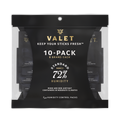
We designed Valet to make the next decision easier. Each humidity pack tells you its primary use right on the front, so a new cigar smoker can get started without learning every variable first. Storage shouldn't feel stressful.
Whichever humidity pack you use, size it for the container and follow the maker's directions.
Don't worry if the same two-way humidity pack gives you a slightly different reading in two different containers. The seal, the amount and condition of the wood, the temperature, the cigars inside, how often you open the lid, and the hygrometer can all affect that number. There is no honest rule that every wood humidor will run a fixed number of points below every plastic one.
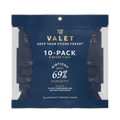
Starting in plastic? Shop Valet 65% humidity packs — one 60g pack per 25 cigars of container capacity.
A few questions you shouldn't overthink
Do you need to burp a tupperdor?
No. You don't need to open a tupperdor on a schedule just to exchange the air. Opening it to choose cigars already introduces room air. If you find condensation, a musty smell, or cigars that went in too wet, fix that problem instead of treating weekly burping as routine maintenance.
Can cigars get moldy in plastic?
Yes. Plastic doesn't cause mold, but it can preserve an overly wet starting condition because very little moisture escapes. Don't load cigars with visible surface moisture, don't add free water, and keep the container out of places that stay hot. A two-way humidity pack can absorb excess vapor, but it isn't an instant fix for soaked cigars or liquid water.
Do you need a hygrometer?
A hygrometer is useful when you're setting up a new container, figuring out what you prefer, or troubleshooting a problem. You don't need to monitor it constantly once a simple setup is working. Use a correctly sized humidity pack, check the container from time to time, and pay attention to how the cigars smoke. The goal is easy storage, not another screen to watch.
A brief note about cigar humidity in 2026
The old 70% RH at 70°F rule isn't the only reference point anymore. Habanos currently recommends 65% to 70% RH. There isn't one new perfect number. Cigar smokers simply have more useful choices than they used to.
In a well-sealed plastic container, we think a 65% humidity pack is a useful place to start. Smoke the cigars, see how they burn and taste, and adjust from there. You may prefer them a little higher or a little lower.
We cover the wider change separately in The State of Cigar Humidity Control in 2026. Your preferred range changes which humidity pack you choose. It doesn't decide whether you need plastic or wood.
What should you use in 2026?
Start with a humidor bag if your collection is small. Move to a tupperdor when you want more protection and organization. Choose an insulated cooler when you need room for boxes or want to slow the temperature swings inside your home.
Buy the wood humidor when you want the wood humidor.
By then, you'll know what size you need, what you enjoy keeping close at hand, and whether the cedar, presentation, and ritual are worth the extra work. Your first dollars can go toward figuring out which cigars deserve a place in it.
Ready for a tupperdor? Shop Valet 65% humidity packs, or use The System if you are still choosing RH.