

How to season a humidor: The simple 14-day method
by Abraham Wolke
A new wooden humidor may look ready for cigars, but the cedar inside is usually dry. Put your cigars in too soon and that wood will start absorbing moisture from the air, the humidity packs, and eventually the cigars themselves.
The simple solution is to season the humidor first. Put one 60g Valet 84% Seasoning Pack inside for every 25 cigars of the humidor's total listed capacity. Keep the humidor empty and closed for at least 14 days. Then remove the seasoning packs, add your normal storage humidity packs, and load your cigars.
Do not wipe down the cedar. Do not put cigars in with an 84% seasoning pack. And do not cut the process short because the hygrometer appears to have reached a high number after a few days.
The quick way to season a humidor
- Empty the humidor and remove any old humidifier puck, sponge, or crystal jar.
- Leave the cedar trays and dividers inside so they get seasoned too.
- Add one 60g 84% seasoning pack for every 25 cigars of the humidor's full rated capacity.
- Close the lid and leave it closed for at least 14 days.
- After the full 14 days, check the seasoning packs. If they are still soft, close the humidor and give them more time. You want the wood to absorb the moisture and the packs to feel dry or firm.
- Remove the 84% seasoning packs. Replace them with the storage humidity packs you plan to use, then add your cigars.
What does seasoning a humidor actually do?
Unfinished wood absorbs and releases water vapor. The USDA Wood Handbook describes this behavior as hygroscopicity. In normal language, dry wood is thirsty.
If you put cigars and regular storage humidity packs into an unseasoned humidor, the dry wood becomes a major moisture load in the box. Your humidity packs may be working perfectly, but much of their moisture is going into the cedar instead of maintaining the conditions around your cigars. The packs run out faster, the hygrometer stays low, and it looks like the humidity control is not working.
We hear versions of this often. A customer tells us the humidity packs are not working, and we ask whether the humidor was seasoned. Once the wood gets a proper seasoning cycle, the same setup usually starts behaving the way it should.
Seasoning gives the wood moisture before your cigars go inside. That lets the cedar act as a moisture buffer instead of immediately pulling moisture out of the system.
At Valet, we sometimes call this creating a moisture barrier because it is a useful shortcut. The wood does not become sealed or waterproof. It is simply brought closer to moisture equilibrium, which means it is less thirsty and less likely to take all the moisture meant for your cigars.
Which cigar containers need to be seasoned?
Season the unfinished wood, not the name of the container.
| Container | What is it? | Does it need seasoning? |
|---|---|---|
| Wood humidor | A purpose-built wooden or wood-lined box for storing cigars | Yes, if it has exposed unfinished wood inside |
| Tupperdor | A clean, gasketed plastic food container used for cigar storage | The plastic does not. Any cedar tray, divider, or insert does |
| Coolidor | An insulated camping or beverage cooler used as a large humidor | The cooler does not. Any unfinished wood inside does |
| Wineador | A wine refrigerator or cabinet converted for cigar storage | The appliance does not. Cedar shelves, drawers, and trays may need seasoning |
| Acrylic, glass, or metal humidor | A nonwood container made for cigar storage | The container does not. Season any unfinished cedar inside |
Cedar trays in plastic and acrylic containers are easy to overlook. A tupperdor may hold moisture extremely well, but a dry cedar tray inside it will still absorb moisture. The same is true of cedar drawers in a wineador and cedar boxes or trays in a coolidor.
Take the cigars out, put the dry cedar pieces in the empty container with the correct number of 84% seasoning packs, and give them the same full 14-day cycle. Then remove the seasoning packs and switch to your normal storage humidity packs before the cigars go back in.
If you are unsure whether an electric humidor or cabinet should be seasoned, follow its manufacturer's directions. Some use exposed cedar that needs conditioning. Others use sealed or finished materials that do not behave the same way.
How many seasoning packs do you need?
Use one 60g Valet 84% Seasoning Pack for every 25 cigars of the humidor's total listed capacity.
| Humidor capacity | 60g seasoning packs |
|---|---|
| 25 cigars | 1 |
| 50 cigars | 2 |
| 75 cigars | 3 |
| 100 cigars | 4 |
| 150 cigars | 6 |
Use the humidor's full capacity, not the number of cigars you normally keep inside it. A 100-count humidor still contains roughly the same amount of wood when you only plan to store 30 cigars.
If the listed capacity falls between two rows, round up. Using enough packs gives the dry wood enough available moisture to complete the process without a bowl, sponge, or direct application of water.
How to season a new wood humidor step by step
1. Start with an empty humidor
Do not season a humidor with cigars inside. Move any cigars to a well-sealed food-safe container with normal storage humidity packs while you work.
Remove any foam puck, sponge, crystal jar, or other humidifier you do not plan to keep using. Leave the humidor's cedar tray and dividers inside. They are part of the wood load and need to absorb moisture too.
If there is loose dust inside, brush it away with a clean, dry cloth. Do not add water or household cleaner.
2. Add enough 84% seasoning packs
Use one 60g seasoning pack for every 25 cigars of total capacity. Spread the packs through a larger humidor instead of stacking all of them in one corner. They can rest directly on cedar.
An 84% pack is made for seasoning an empty humidor. It is not a cigar-storage humidity pack.
3. Close the lid for at least 14 days
Once the packs are inside, close the humidor and leave it alone. Do not open it every morning to check the hygrometer. Every time you open the lid, you exchange the humid air inside for room air and slow the process down.
Fourteen days is the minimum because the wood needs time to absorb moisture, not because the air needs two weeks to become humid. The hygrometer may climb quickly while the cedar deeper in the box is still taking on moisture.
4. Check the packs after the full 14 days
After day 14, feel the seasoning packs. They should feel dry or firm after releasing most of their moisture. If they are still soft, close the humidor and let the process continue.
The hygrometer does not have to read exactly 84%. It only measures the air around its sensor, and consumer hygrometers have their own accuracy and response limits. The amount of wood, the box construction, temperature, pack placement, and the meter itself can all change the reading.
The full seasoning cycle and the condition of the packs are more useful than chasing one exact number on the display.
5. Switch to storage humidity packs
Remove the 84% seasoning packs before adding cigars. Then add enough storage humidity packs for the humidor's full capacity and load your cigars.
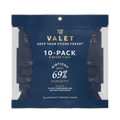
For most wooden humidors, 69% humidity packs are a sensible place to start. If the hygrometer settles around 67% and the cigars smoke the way you like, that is not a problem that needs fixing. The number on a humidity pack is a target for the pack, not a promise that every wooden box and every hygrometer will display exactly the same reading.
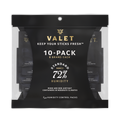
If you prefer a softer cigar or want to stay closer to the traditional 70% range, try 72% humidity packs. Change one step at a time and judge the result by how the cigars burn, draw, and taste, not by a single point on a screen.
For more on why cigar smokers have been moving toward lower storage ranges, read The state of cigar humidity control in 2026.
Why we do not recommend wiping down the cedar
The traditional method is to wipe the inside of a humidor with distilled water, place a damp sponge or small dish of water inside, and watch the hygrometer until the number looks high enough. Plenty of cigar smokers have seasoned humidors this way.
We do not recommend it because it is hard to control.
A wet cloth puts liquid water directly on the surface of the wood. One area can become much wetter than another, and it is easy to add more water than you meant to. If you overdo it, the wood can swell or develop water marks.
An 84% humidity pack releases water vapor gradually, which makes the process easier to control and repeat. The goal is not to make the cedar look wet. It is to let the exposed wood absorb moisture over time.
Wiping down the cedar does not guarantee damage, but it gives you less control. That is why we prefer seasoning with humidity packs.
What if the humidity is still low after seasoning?
Do not start adding random bowls, sponges, or extra water. Work through the likely causes in order.
Give the setup time to settle
Once the storage humidity packs and cigars go in, keep the humidor closed for several days. Cigars, wood, and room air can all bring different starting conditions into the box. A hygrometer also needs time to adjust after a large temperature or humidity change.
Check the hygrometer
Hygrometers can drift as they age, but a quick humidity swing does not necessarily knock one out of calibration. The reading may simply lag while the sensor responds and conditions settle. Some sensors can also show a temporary offset after high-humidity exposure.
If the reading still looks wrong after the humidor has settled at a stable room temperature, compare the hygrometer with a known reference or a second trusted meter. A one-point calibration check can show that a meter is off near that reference point, but it does not prove perfect accuracy across every humidity level.
Confirm the pack count
Size the storage humidity packs for the humidor's full capacity, not its current cigar count. If the box holds 100 cigars, the humidity system still has to manage the same container and wood when only 20 cigars are inside.
Inspect the humidor
Look for cracks, gaps, a loose lid, or hardware that prevents the lid from closing evenly. A seasoning cycle cannot repair a poorly built or badly leaking humidor.
If the meter, pack count, and seal all look right, another full seasoning cycle may help. If the box still cannot hold humidity after that, the problem is probably the humidor itself, not the humidity pack.
Keep your cigars in a sealed temporary container while you diagnose the empty wooden humidor.
How often should you re-season a humidor?
A wooden humidor does not need to be emptied and re-seasoned every year just because the calendar says so. If it stays closed, holds your normal range, and always has active storage humidity packs inside, leave it alone.
Re-season when there is a reason to believe the wood has dried out. Common signs include:
- The humidor sat empty, open, or without humidity control for a long time.
- Storage humidity packs become dry much faster than they normally do.
- The RH stays low after you verify the hygrometer, pack count, and seal.
- The humidor was intentionally dried after cleaning or repair.
- The same problem returns when a very dry season begins.
If you live in a dry or strongly seasonal climate, check the humidor at the start of the dry season. Some boxes may benefit from re-seasoning about once a year. A well-sealed humidor that remains stable may not need another full cycle at all.
When you do re-season it, remove the cigars and repeat the same 14-day process. Seasoning helps dry wood. It does not fix a leak, and adding more moisture should never be the first response to a questionable hygrometer reading.
Give the wood time, then make storage easy
A common seasoning mistake is treating the air reading as the whole job. The air can become humid in a few hours, but the wood takes longer.
Give a new or dried-out humidor the full 14 days. Use enough 84% seasoning packs for its total capacity. Wait until the packs have given up their moisture, then switch to normal storage humidity packs before the cigars go inside.
Once the wood is properly conditioned, the cedar can buffer changes without consuming all the moisture meant for your cigars. Your storage humidity packs can maintain the humidor instead of spending their capacity rescuing dry wood.